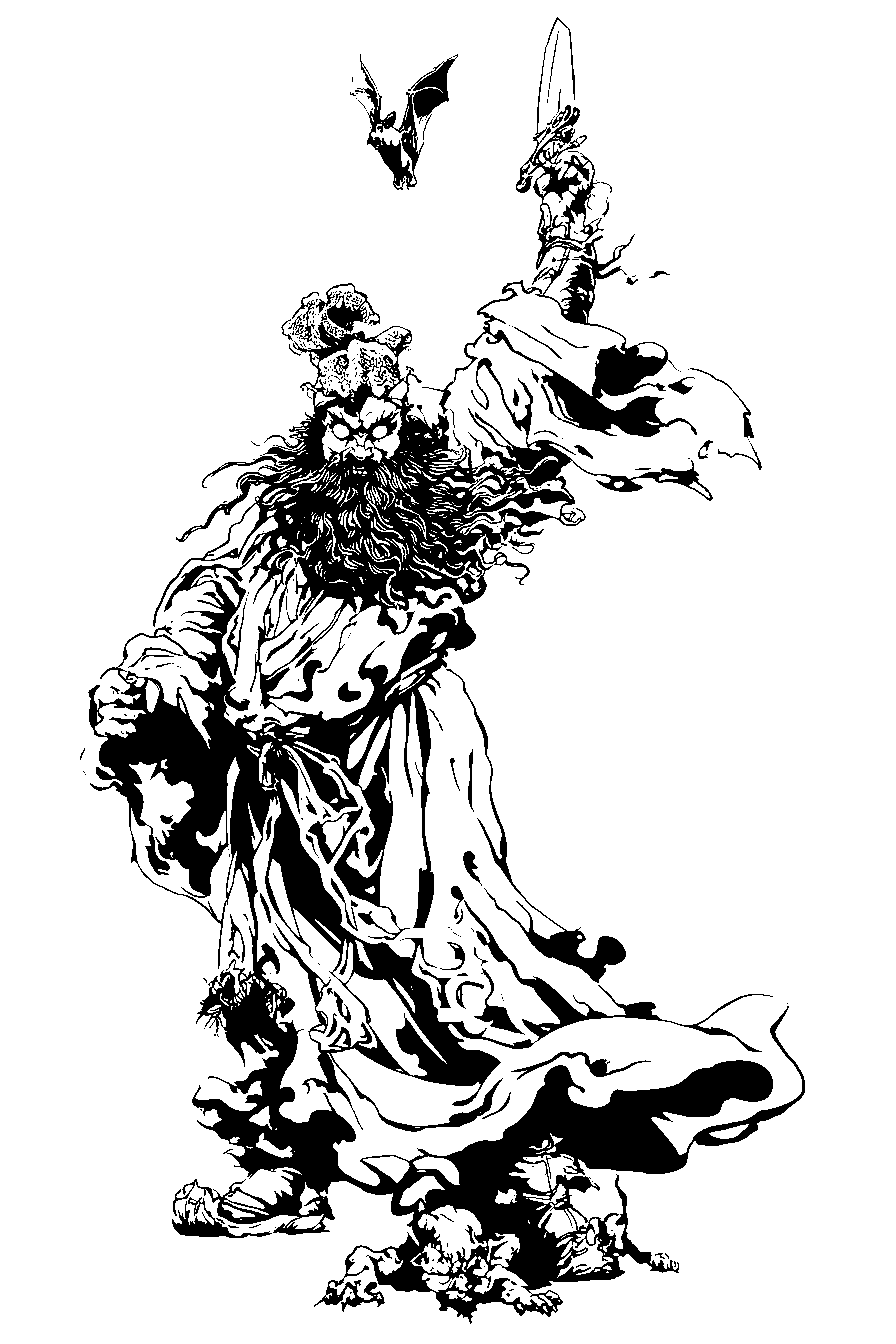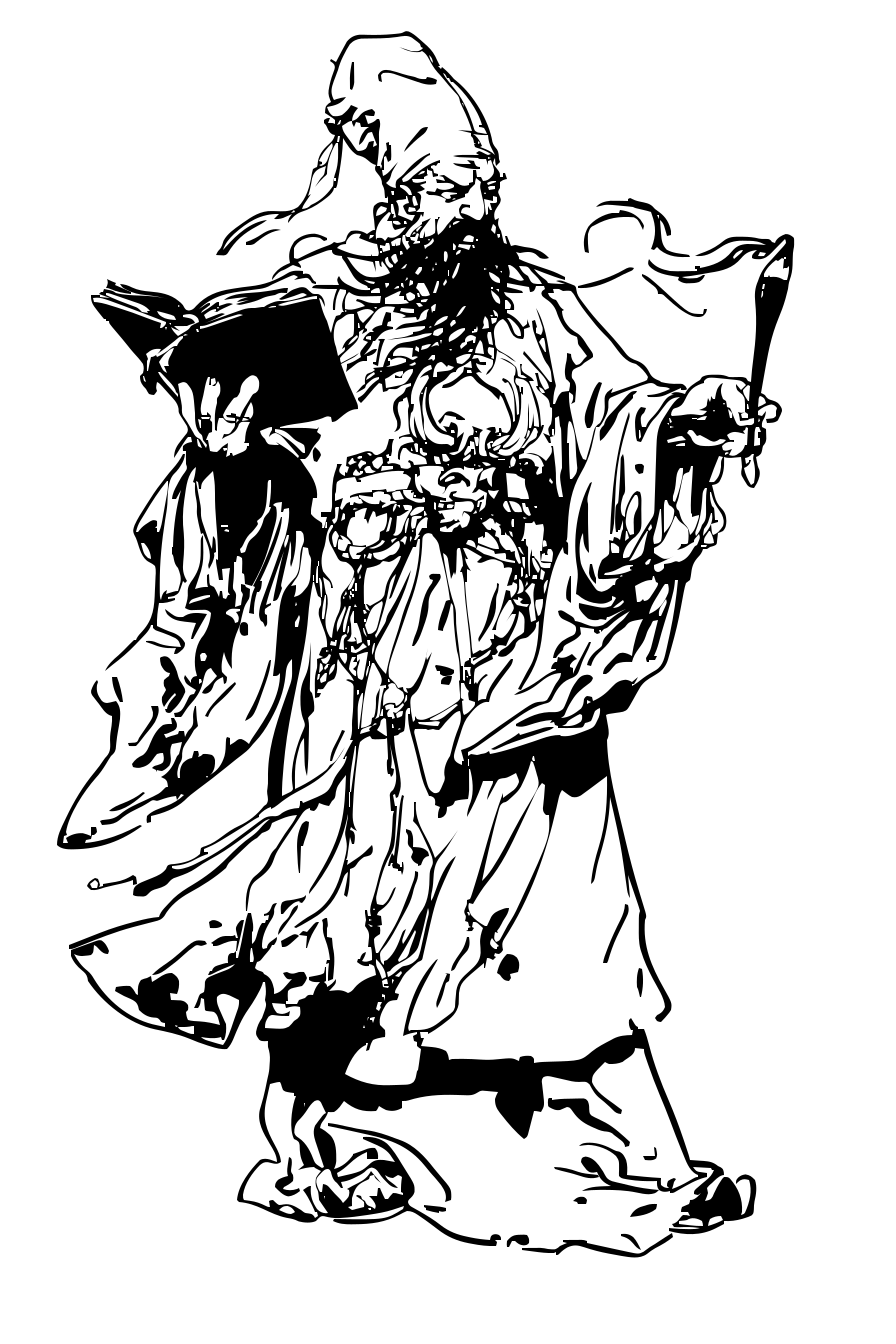
Judge Cui, the Ledger and the Brush — Blackwork (Standing)
blackwork · black · portrait
back · upper-arm
$29
崔判官Cuī Pànguān
also known as: Cui Jue, Cui Fujun, Judge of the Underworld
He judged the living by day and the dead by night — and once quietly rewrote an emperor’s death date.
崔判官Judge Cui — Cui Jue — is the most famous of the underworld’s four great judges, and his defining appearance comes from one of the best-loved episodes of Journey to the West. In life, the novel tells us, he was the county magistrate of Changzi in Luzhou during the early Tang — and there really was a Cui Jue serving in that region in the Zhenguan era, which is part of why the legend stuck. His reputation was supernatural even before he died: "by day he ordered the affairs of the mortal world; by night he judged the grievances of the shades." When Emperor Taizong’s soul was summoned to the underworld over a dragon’s lawsuit, it was Cui Jue — by then keeper of the register of life and death — who received him. Finding the emperor’s allotted lifespan already expired, the judge quietly took up his brush and added twenty years to the ledger, sending Taizong back to the living. It is the great fantasy of Chinese folk justice: even the king of hell’s paperwork can be corrected by an honest friend with a pen.
Journey to the West (chapter 10) describes Judge Cui in bureaucrat’s splendor: a black gauze cap, a robe of red silk, a rhinoceros-horn belt, white-soled boots, bushy sideburns and whiskers that seem to fly. His attributes are unmistakable and perfect for tattoo composition: in his left hand, the Ledger of Life and Death — the book in which every mortal’s allotted years are written — and in his right, the soul-hooking brush, the pen that can summon, strike out, or extend a life. Unlike Zhong Kui, there is nothing bestial about him: his power is administrative. He is the terrifying idea that the universe keeps records, and that someone incorruptible is reading them.
Cui Jue sits at the head of a popular four-judge schema of the Chinese underworld — folk tradition assigns Wei Zheng to the Bureau of Rewarding Good, Zhong Kui to Punishing Evil, Lu Zhidao to Investigation, and Cui Jue to Underworld Law, though the exact assignments vary by source and should be treated as folklore rather than canon. His cult was anything but marginal: the Song dynasty enfeoffed him as the "Perfected Lord Who Protects the State and Manifests Response," temples to Cui Fujun (Lord Cui) spread across northern China, and the Southern Song capital kept the sixth day of the sixth lunar month as his birthday, recorded in the Mengliang Lu. He belongs to a characteristically Chinese idea: the underworld imagined not as chaos but as a vast civil service, with judges, ledgers, and due process for the dead.
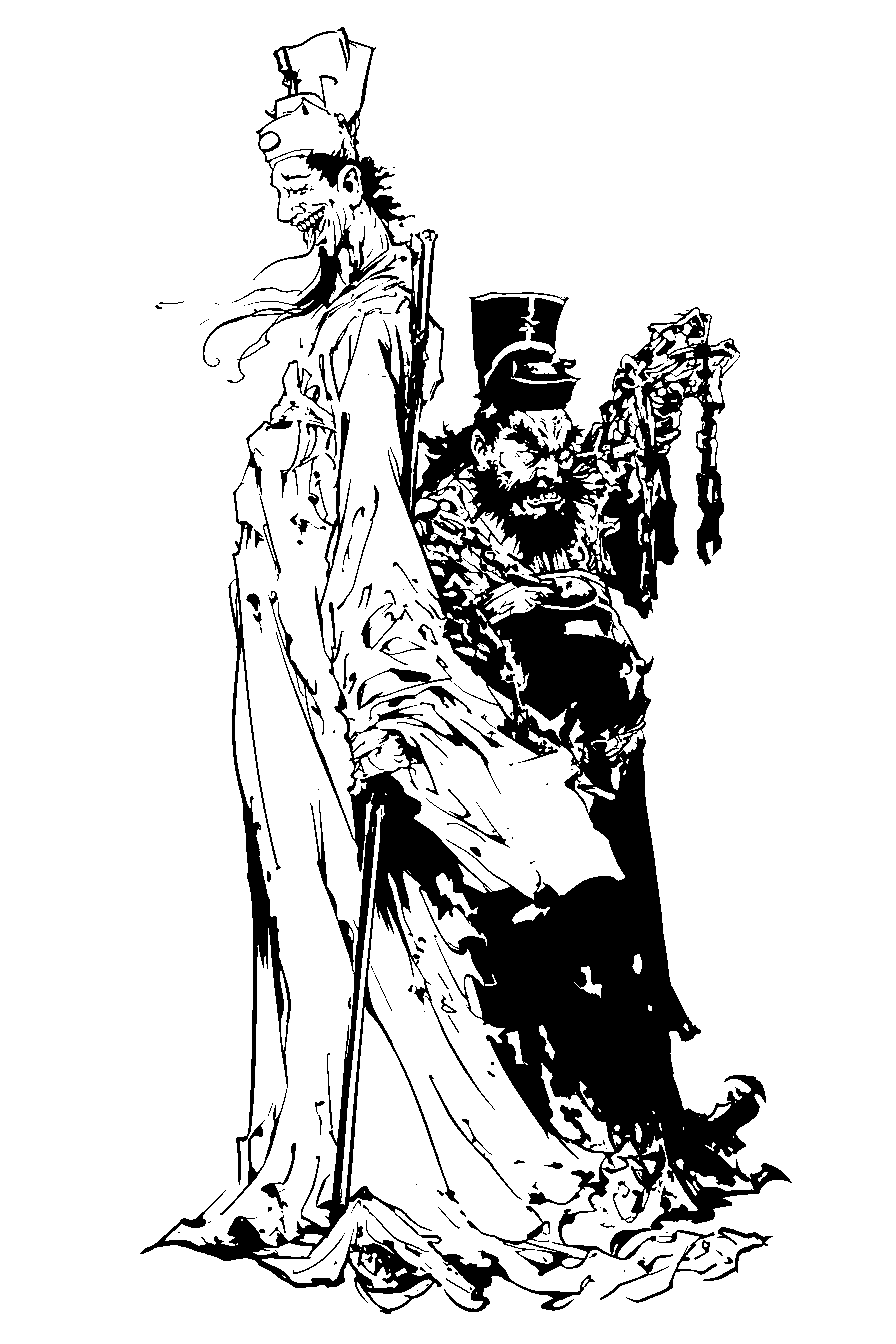
A Judge Cui tattoo speaks to justice, discernment, and command over one’s fate. The ledger and brush are the appeal: he is the figure who looks past excuses, sees exactly what a life adds up to — and, in the Taizong story, proves that fate written down can be revised. Wearers drawn to him tend to read the image as "my life is mine to edit": a verdict on honesty, fairness, and second chances rather than a menacing one. Compared with Zhong Kui’s raw ferocity, Judge Cui is the cerebral choice — the underworld’s intellect rather than its muscle. He also works beautifully as part of a larger underworld composition, flanked by the Black and White Wuchang who bring souls to his bench.
In Chinese folk tradition, imagery of underworld officials is generally treated as "heavy," and folk tattoo circles apply the same caution to Judge Cui as to Zhong Kui: a person of insufficient "fate strength" is said to be unable to "carry" a god who holds the brush over life and death. We present this as folk belief, not fact. A further cultural nuance, often cited in Chinese tattoo discussions, is functional: Judge Cui is a law-enforcer, not a guardian — his role is to judge you, not to protect you — so traditional tattoo circles have rarely worn him alone, and he more often appears as a supporting figure in full underworld scenes. (We flag this as an observation from folk practice rather than documented doctrine; systematic writing on Judge Cui tattoo custom is scarce.) As always: understand the image, wear it with respect, and decide for yourself.
Each design includes the color reference, line art and a print-ready stencil. Instant download; take it to any tattoo artist.
blackwork · black · portrait
back · upper-arm
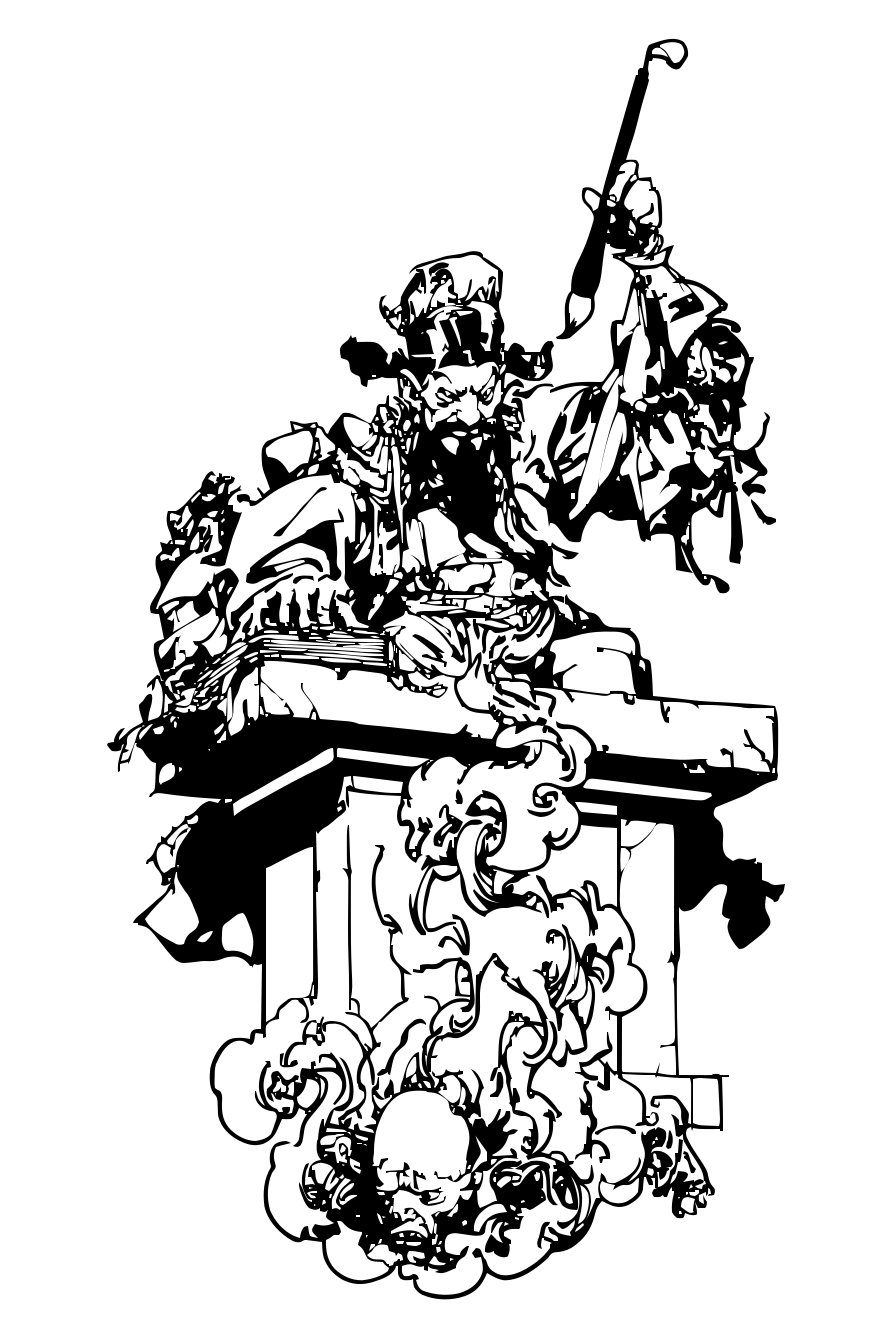
blackwork · black · portrait
back · thigh
Justice, clear-eyed judgment, and authorship of your own fate. Judge Cui holds the ledger of life and death and the brush that can amend it — in Journey to the West he adds twenty years to Emperor Taizong’s life. Wearers read the image as fairness that sees through pretense, and as a reminder that what is written can be rewritten.
Cui Jue, the most famous of the Chinese underworld’s four judges. In life an early-Tang county magistrate famed for judging the living by day and the dead by night; in death, keeper of the register of life and death. His starring role is in Journey to the West chapters 10–11, where he receives Emperor Taizong’s soul in the underworld.
Chinese folk tradition treats underworld officials as "heavy" imagery and holds that only a person of strong destiny can carry them — a folk belief, not a fact, and one we document rather than endorse. Culturally, Judge Cui was a widely worshipped deity with temples across northern China and a Song-dynasty imperial title, so the figure itself is revered, not taboo. Respectful intent and good reference material matter more than the old warnings.
Both belong to the underworld’s judicial machinery, but their energy differs. Zhong Kui is the field officer: ferocious, protective, demons in his fists — an outward-facing ward. Judge Cui is the bench: calm, bureaucratic, holding the ledger and brush — an image of judgment and fate. Traditionally Zhong Kui is worn as a guardian; Judge Cui more often anchors larger underworld compositions, though his ledger-and-brush motif works standalone.
Yes — that is arguably his most traditional context. Chinese underworld imagery is an ensemble: the Black and White Wuchang arrest and escort souls, Judge Cui weighs them, and the Kings of Hell sentence them. A back piece with Judge Cui at the bench and the Wuchang pair below reads coherently to anyone who knows the mythology. Keep each figure’s canonical attributes straight — ledger and brush for Cui, tall inscribed hats for the Wuchang.