Heibai Wuchang, the Twin Soul-Escorts — Blackwork (Duo)
blackwork · black · portrait
back · calf
$29
黑白无常Hēibái Wúcháng
also known as: Black and White Impermanence, The Wuchang Pair, Seventh and Eighth Masters, Hei Wuchang, Bai Wuchang
One drowned keeping a promise; the other hanged himself for arriving too late. Hell rewarded them both.
黑白无常The Black and White Wuchang are the Chinese underworld’s twin soul-escorts — the constables sent to fetch your spirit when your time runs out. Their names are moral lessons compressed into puns: White Wuchang is Xie Bi’an, "thank the gods and you will surely have peace," known as the Seventh Master; Black Wuchang is Fan Wujiu, "for the lawless there is no salvation," the Eighth Master. Folk legend gives them the most moving origin story in the underworld’s ranks. In life they were sworn brothers — some versions say yamen runners — who agreed to meet beneath the Nantai Bridge. Caught by rising floodwater, Fan refused to leave the appointed spot and drowned rather than break his word; Xie, arriving to find his brother dead, hanged himself from grief. That is why White Wuchang wears his long tongue — the mark of a hanged man. The King of Hell, honoring a faithfulness that death could not bend, appointed them officers of his court.
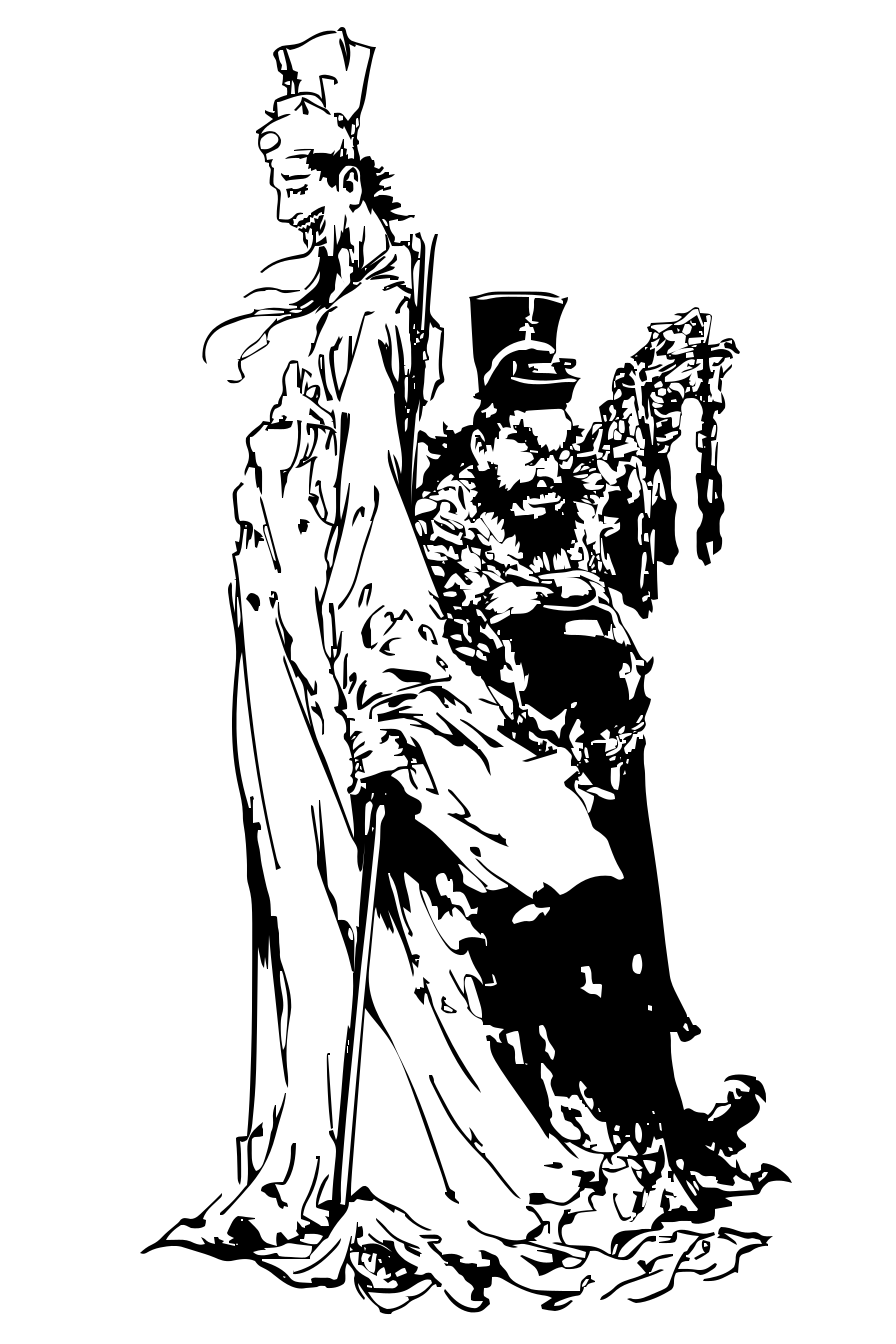
The pair are designed as opposites, and the contrast is the whole composition. White Wuchang: tall and gaunt, dressed in white, face smiling, long tongue lolling, a towering hat inscribed "Fortune at First Sight" (一见生财), carrying a mourning stick or palm-leaf fan. Black Wuchang: short and stocky, dressed in black, face twisted in rage, hat inscribed "Peace Under Heaven" (天下太平), gripping chains and shackles. Other hat inscriptions circulate in folk versions — "You’re Here Too" and "Coming to Get You" — equal parts menace and deadpan humor. Their look was standardized by the illustrations of the Qing morality book Jade Calendar Precious Records, and Lu Xun’s memoir essay "Wuchang" — recalling the endearing "Living Wuchang" of Shaoxing opera — remains the classic literary portrait. Yin and yang, smile and scowl, white and black: they are a ready-made two-figure tattoo.
Wuchang means "impermanence" — the Buddhist truth that nothing lasts, embodied as the officers who personally deliver the message. The pair rank among the Ten Marshals of the underworld, serving the City God, the God of Mount Tai, and the Kings of Hell. Their function is division of labor by moral polarity: the white one receives the souls of the good, the black one chains the wicked — black and white mapping onto yin and yang, punishment and mercy. Folk custom could be surprisingly fond of them: a Beiping customs compendium records that meeting White Wuchang and begging from him could bring wealth, and Lu Xun remembered the opera Wuchang of his Shaoxing childhood as the most beloved, most "human" figure in the entire ghost pantheon — a grim reaper people genuinely liked.
Despite being death’s ushers, the pair’s mainstream tattoo meanings are almost aggressively positive. The hat inscriptions carry the load: "Fortune at First Sight" and "Peace Under Heaven" make the Wuchang a charm for prosperity and stability — take the words seriously and the image is closer to a lucky couplet than a horror piece. The origin legend adds a second, deeper register: loyalty unto death. Sworn brothers, a kept appointment, a friendship the King of Hell himself had to honor — the pair is a natural choice for friendship tattoos, memorial pieces, and matching ink between two people. And underneath everything sits the name itself: impermanence. Worn as a memento mori, the Wuchang remind you that time is limited and promises matter — seize the day, keep your word. In a larger composition they traditionally escort souls to Judge Cui’s bench, which makes them ideal flankers for an underworld back piece.
In Chinese folk tradition, the Wuchang count as "fierce" imagery: folk tattoo circles hold that wearing ghosts against your skin invites yin energy and bad luck, and that only a person with a "hard fate" should carry underworld figures. We present these as folk beliefs, not facts — we document the culture, we do not preach the superstition. The counterweight is real and older than the warnings: folk religion itself treats White Wuchang as a bringer of windfalls and the opera Wuchang as a lovable figure, and the hat inscriptions are literal blessings. If you wear the pair, the one piece of advice the culture would insist on is accuracy — get the hat inscriptions right, keep black and white in their correct roles, and the image speaks for itself.
Each design includes the color reference, line art and a print-ready stencil. Instant download; take it to any tattoo artist.
blackwork · black · portrait
back · calf
Three layers: luck (the hats read "Fortune at First Sight" and "Peace Under Heaven"), loyalty (the sworn-brother legend — one drowned keeping an appointment, the other died of grief), and memento mori (wuchang literally means impermanence). Depending on which layer you emphasize, the pair reads as a lucky charm, a friendship emblem, or a reminder that time is short.
Chinese folk tradition says underworld figures are "heavy" imagery that can attract yin energy, and that only people of strong destiny should wear them — a folk belief, not a fact. Notably, folk religion itself undercuts the fear: White Wuchang was believed to grant windfalls, and Lu Xun recalled the opera Wuchang as the best-loved ghost in the pantheon. Their hats carry blessings, not curses.
Traditionally they are a unit — the yin-yang contrast is the point, and folk compositions almost always show them together. The classic tattoo solution is one figure per forearm or calf. A solo White Wuchang ("Fortune at First Sight," the smiling one) is a coherent standalone choice; a solo Black Wuchang reads as pure menace and loses the balance.
White Wuchang (Xie Bi’an, Seventh Master): tall, thin, white robes, smiling, long tongue, hat reads "Fortune at First Sight," receives good souls. Black Wuchang (Fan Wujiu, Eighth Master): short, stocky, black robes, wrathful, hat reads "Peace Under Heaven," chains the wicked. White equals yang and mercy; black equals yin and punishment — though the inscriptions give both a protective, blessing-bearing side.
The canonical inscriptions, standardized in Qing-era Jade Calendar illustrations: White Wuchang’s tall hat reads "Fortune at First Sight" (一见生财); Black Wuchang’s reads "Peace Under Heaven" (天下太平). Folk variants include "You’re Here Too" and "Coming to Get You." For a tattoo, verify the characters with a native reader — the inscriptions are the soul of the design.